As a critical piece of public infrastructure, the facility plays an essential role in protecting public health, preserving water quality, and maintaining wastewater services throughout the community.
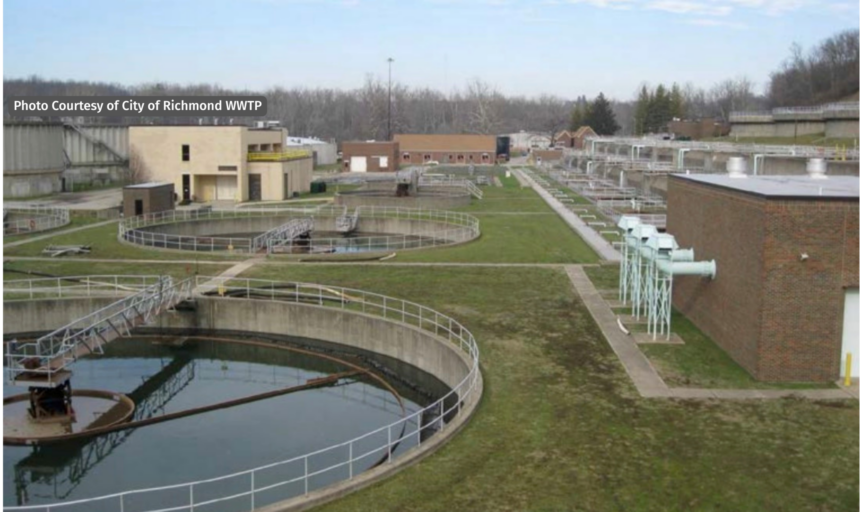
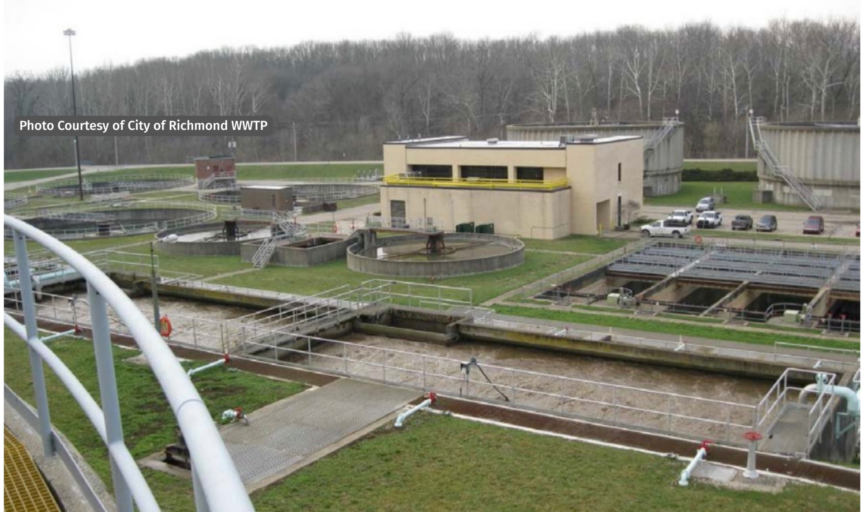
Located along the East Fork Whitewater River in Richmond, Indiana, the Richmond Sanitary District’s wastewater treatment plant serves more than 20 square miles throughout the city and surrounding Wayne County. The facility processes millions of gallons of wastewater daily before discharging treated water into the East Fork Whitewater River, which flows downstream into Brookville Reservoir.
The treatment plant is protected by an earthen levee originally constructed during a major facility expansion in the early 1980s. Never fully completed or certified, its northern section was at a lower elevation and was vulnerable to flooding. Recognizing the need for improved flood resilience, the Richmond Sanitary District initiated a project to rehabilitate and extend the existing levee to protect critical pumps, equipment and treatment systems.
A key challenge in completing the levee improvements was maintaining vehicle access to the treatment plant. Simply raising the existing earthen levee across the access roadway would restrict normal operations and require substantial additional modifications. The project needed a solution that could close this vulnerable opening during a flood while allowing unrestricted access under normal conditions.
As part of the levee improvement project, the City of Richmond Sanitary District incorporated a 55-foot-long by 3.75-foot-high FloodBreak passive automatic vehicle floodgate to protect the roadway opening within the levee system.
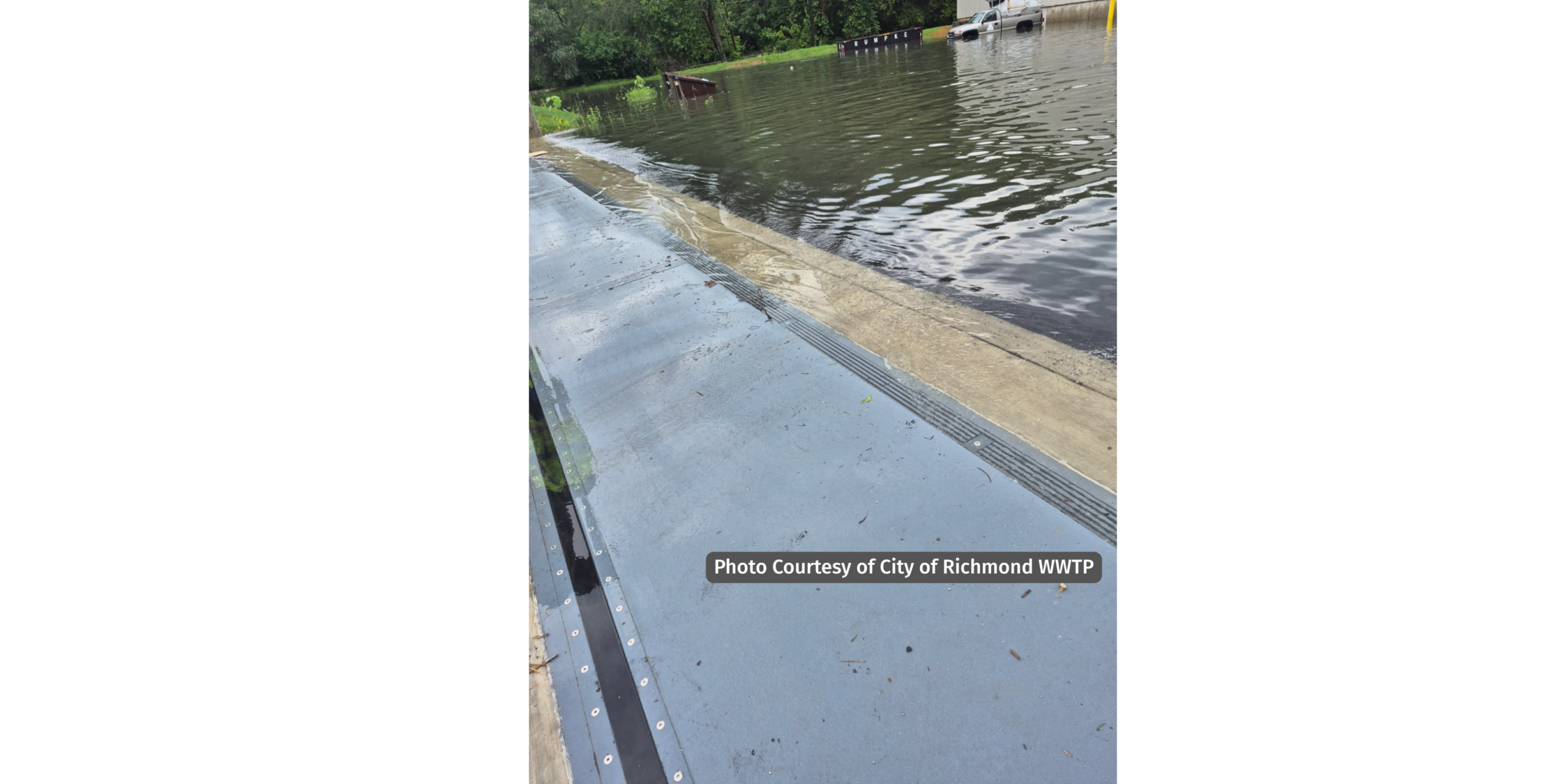
The floodgate provides continuous flood protection, 24/4/365 without interfering with the facility’s daily operations. Under normal conditions, the barrier remains concealed below grade, allowing vehicles to pass directly over it without obstruction.
When floodwaters approach, water enters the gate’s underground reservoir, activating the passive system. The rising water provides the buoyancy necessary to automatically lift the barrier into its protective position, without requiring personnel, external power, or manual deployment. As floodwaters recede, the barrier automatically returns to its resting position.
By incorporating FloodBreak’s passive technology into the existing levee system, the facility can maintain necessary vehicle access while ensuring the opening is protected during rising water events. This eliminates the need to mobilize personnel to install or remove temporary flood barriers, providing dependable protection 24 hours a day, 365 days a year.
By incorporating FloodBreak’s passive technology into the levee system, the facility can maintain vehicle access while ensuring that it is protected during rising water events. This eliminates the need to mobilize personnel to install or remove temporary flood barriers, providing dependable protection 24 hours a day, 365 days a year.
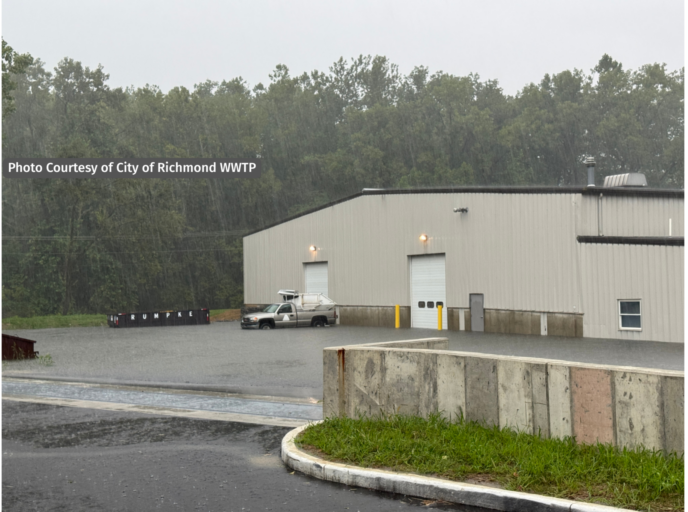
On October 1, 2026, heavy rainfall and rising floodwaters put the FloodBreak system into action. The passive floodgate partially deployed in response to the rising water level.
This rain event demonstrated a key advantage of FloodBreak passive flood protection: the barrier responds proportionally to rising floodwaters, deploying only as much as necessary and returning to its resting position as flood water recede. Unlike traditional stop logs or other manually deployed barriers that require personnel to install and remove protection for each event, FloodBreak’s system operates automatically, even during minor flooding.
For the Richmond Sanitary District, this means the facility has flood protection ready to respond whenever water rises, helping safeguard critical wastewater operations without adding the burden of manual deployment or removal.