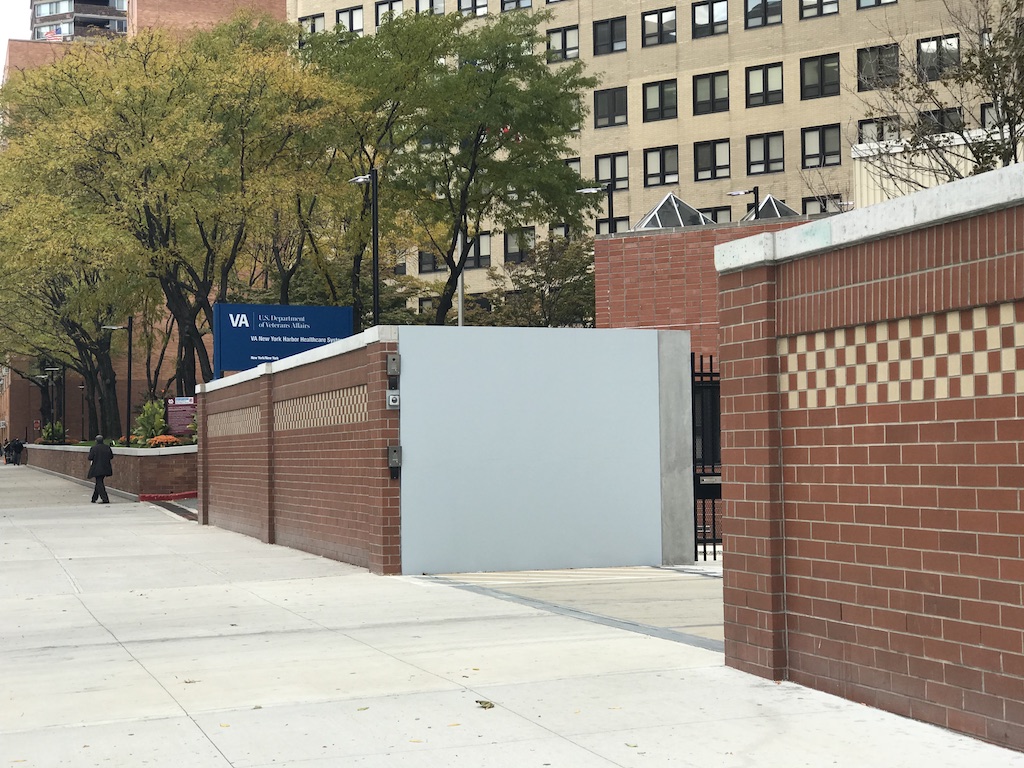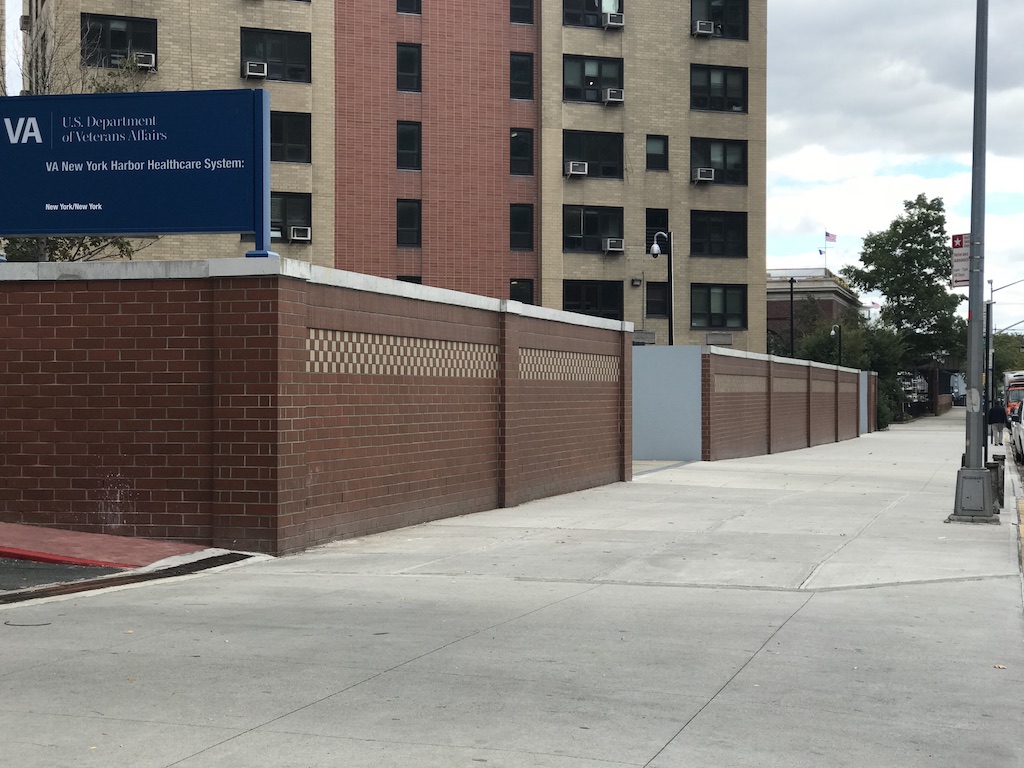
Located along Manhattan’s East River, the VA New York Harbor Healthcare System suffered significant damage during Superstorm Sandy. Storm surge affected the facility’s ground floor and below-grade areas, damaging critical utilities, medical equipment, and clinical spaces and significantly disrupting hospital operations.
Following Sandy, the VA undertook a major flood preparedness and recovery program designed to protect the medical center from future storm events. Global engineering firm, HDR prepared a Flood Resiliency Study and developed the floodwall system, with design considerations that included FEMA requirements, wave and wind conditions, hydraulic and structural loads, seismic loads, and interior sanitary and stormwater drainage during flood events.
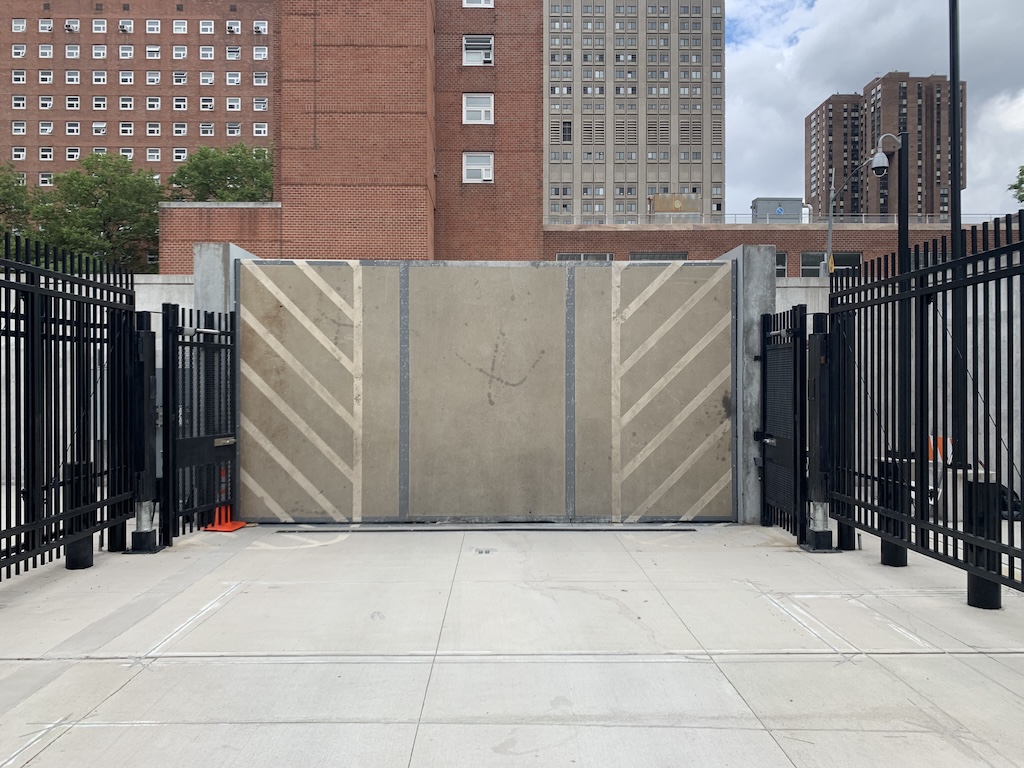
The engineering challenge was straightforward but critical: a floodwall can protect a facility only if the openings required for daily vehicle access can also be reliably protected during a flood.
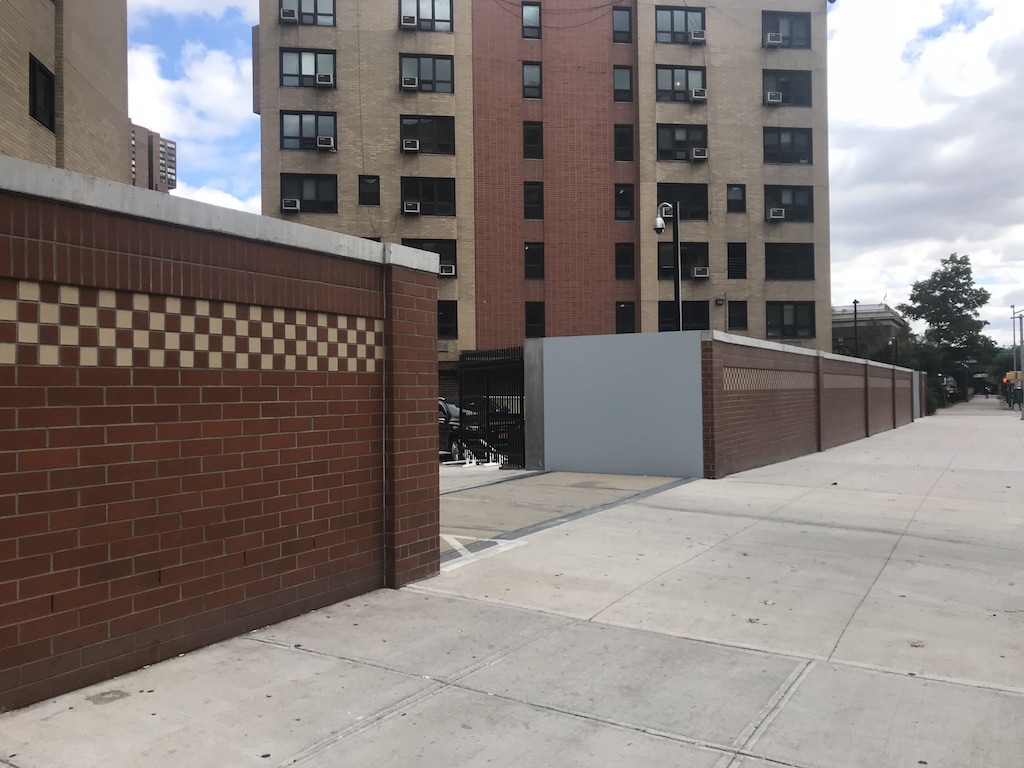
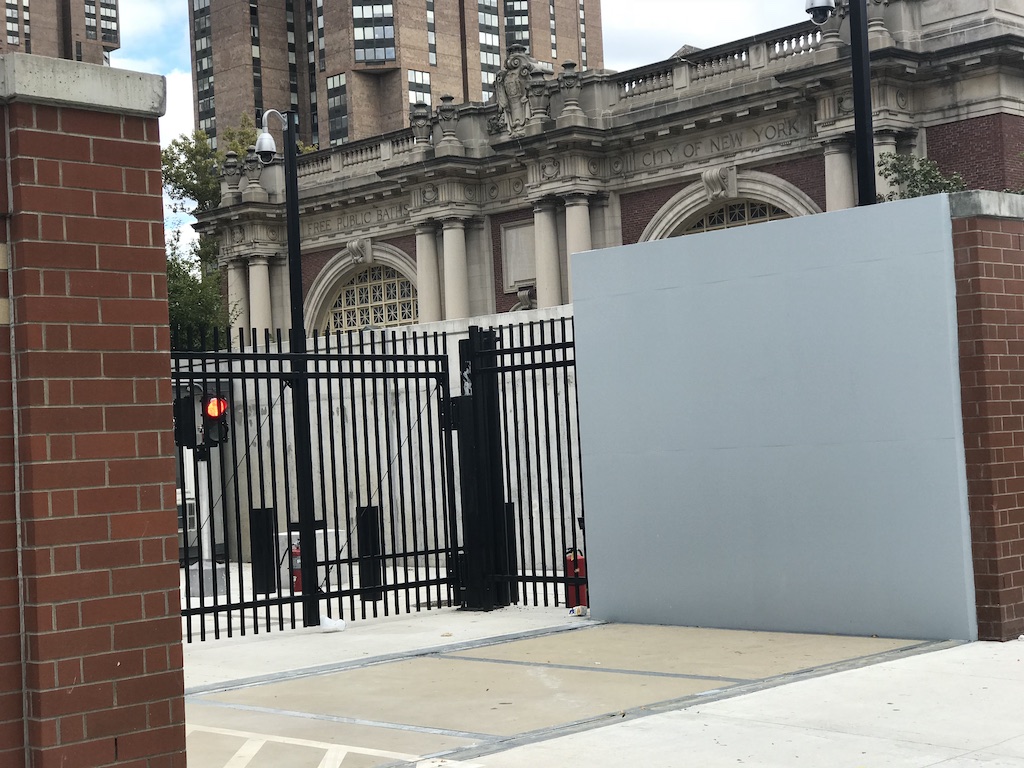
The resulting project created a permanent flood protection perimeter around the facility. Construction by John Civetta & Sons, it included floodwalls, seepage protection, automatic floodgates and other site improvements.
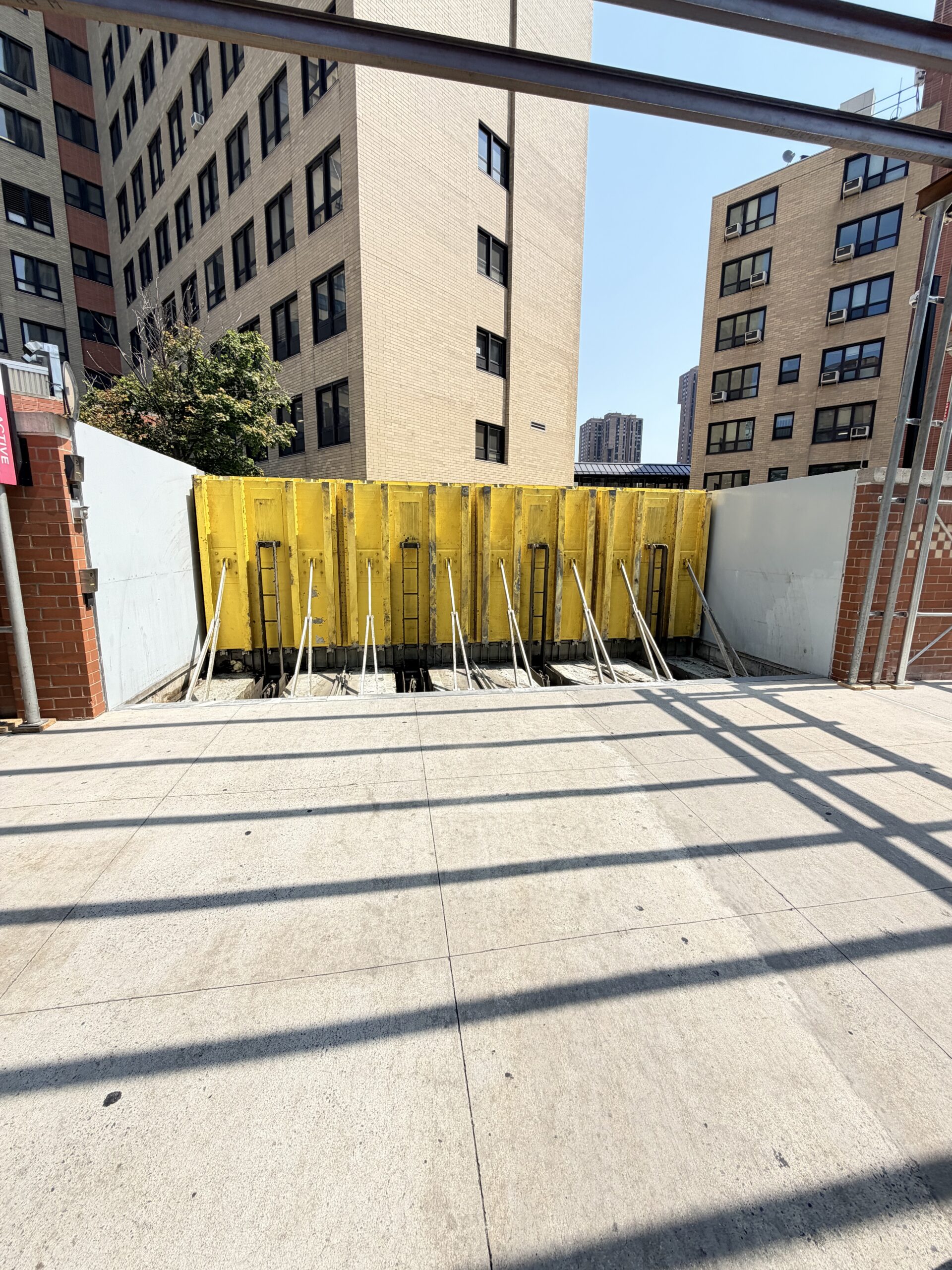
Five FloodBreak passive automatic flood barriers were incorporated into the perimeter system at key floodwall openings, providing dependable flood protection 24/7, 365 days a year.
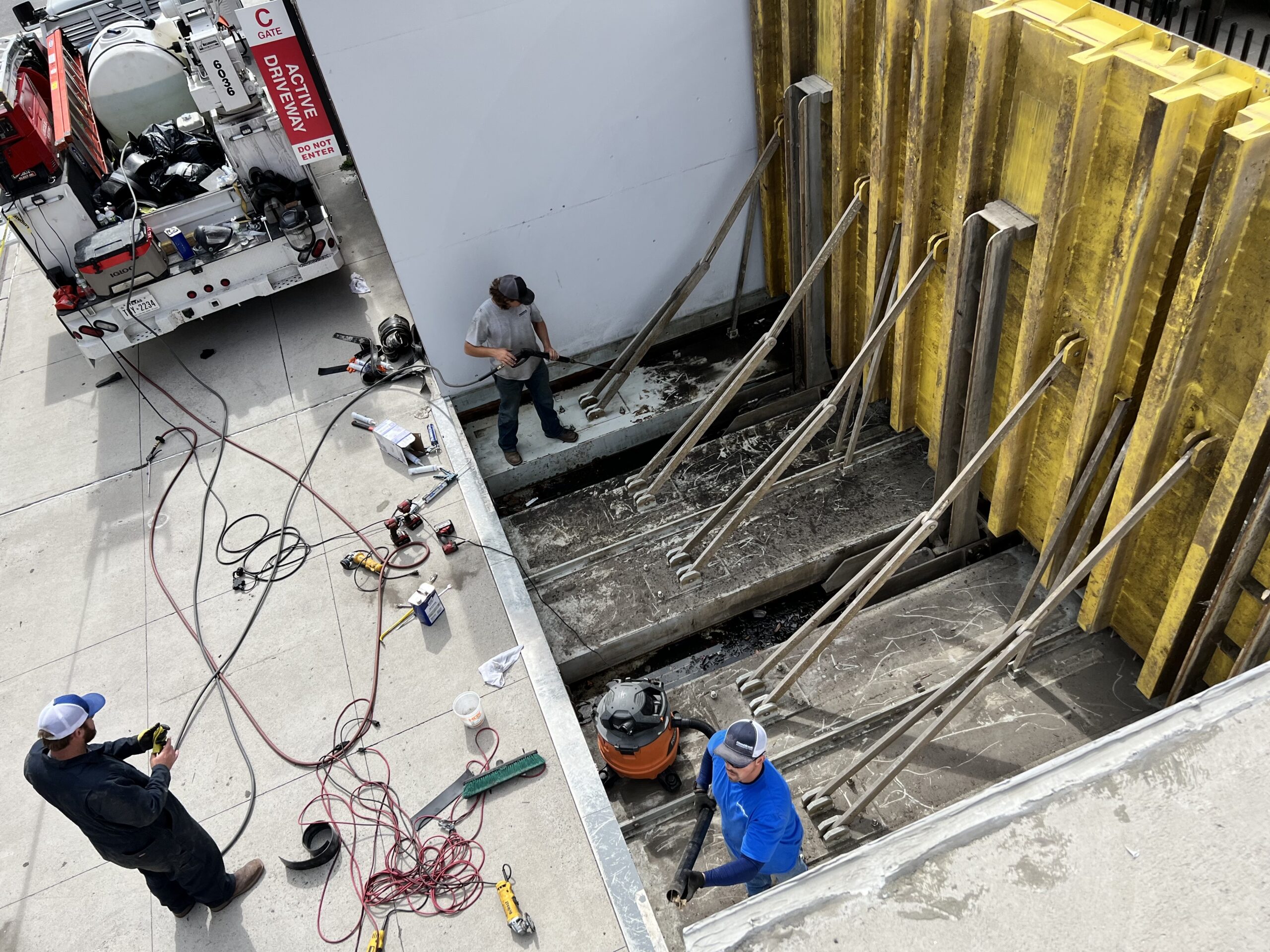
Under normal conditions, the barriers remain hidden, below grade, preserving full vehicular access to the medical facility. During a flood event, rising water passively activates the barriers and provides the buoyancy needed to raise them into their protective position. Flood deployment requires no personnel, external power or manual intervention.
Each gate is equipped with a push-button powered lift system, allowing for quick and easy deployment during routine operations, inspections, and scheduled maintenance. A single operator can raise the barriers without requiring lengthy closures or large maintenance mobilizations.
This passive operation is particularly valuable for hospitals and other critical infrastructure, where a flood may occur overnight, during a power outage or while facility personnel are focused on emergency operations.
Each barrier was custom-engineered to meet all loading requirements and protect to the DFE which exceeded 10 feet along sections of the perimeter flood protection system.
Installed Flood Protection:
All flood barriers were equipped with push-button hydraulic lifts.
The completed project provides the facility, today known as the Margaret Cochran Corbin VA Campus, with a permanent flood protection system while preserving the access required for normal hospital operations.
FloodBreak’s five passive automatic barriers protect critical perimeter openings without requiring gates to be manually installed or deployed before a storm. This eliminates dependence on personnel, advance warning time, or external power while maintaining everyday access.