


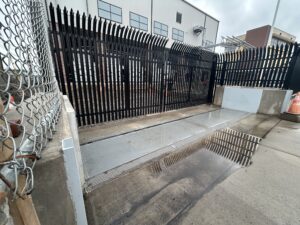
Flood Protection for all project sizes: The latest in our “Why Passive?” series
From a single doorway to an entire urban waterfront, flood protection shouldn’t be limited by the size or complexity of a project.
Flood risk affects infrastructure of all types and scales, and every location presents unique challenges.
Whether protecting an individual building entrance, a critical facility, or a large-scale infrastructure project, effective flood protection must be engineered to meet the specific requirements of each site.
In the latest installment of FloodBreak’s “Why Passive?” video series, Lou Waters, Founder and CEO of FloodBreak, explores how passive automatic flood protection can be adapted to projects of virtually any size.
With more than 2,500 installations worldwide, FloodBreak has demonstrated the versatility of its technology across a wide range of applications, including parking garages, hospitals, subway systems, roadways, and coastal infrastructure.
A key advantage of FloodBreak’s technology is its modular, self-supporting design, which has no practical height or length limitations. FloodBreak has engineered floodgates exceeding 12 feet in height and spanning hundreds of feet without the need for vertical supports or stanchions. This flexibility allows engineers to address challenging openings and complex infrastructure requirements without being restricted to standard barrier configurations.
Beyond size and adaptability, FloodBreak’s passive automatic floodgates provide another critical advantage: dependable protection without relying on people or power for deployment. The barriers remain hidden during normal operations and automatically rise with incoming floodwater, providing protection 24 hours a day, 365 days a year.
Watch the latest video, “Is FloodBreak a Fit for Projects of All Sizes? Yes.” to hear Lou Waters explain how FloodBreak’s proven technology can scale from individual facilities to expansive infrastructure projects without compromising the benefits of passive protection.
Explore More from Our “Why Passive?” Video Series
This latest installment builds on two earlier videos exploring the applications and long-term advantages of passive automatic flood protection.
“What Types of Infrastructure Benefit Most from Passive Flood Protection?”
Lou Waters discusses how hospitals, utilities, government facilities, and other critical infrastructure can benefit from systems designed to protect essential operations during flooding.
“When is Passive Flood Protection the Best Approach?”
Examines the advantages of passive systems versus active flood protection methods that require personnel, power, or manual deployment.
Explore the full “Why Passive?” series on our Video Hub to learn more about the advantages of passive automatic flood protection.